Showing posts with label Arthur Hobson Quinn. Show all posts

Thursday, February 3, 2022

GILBERT EMERY’S THE HERO


The Hero, written in 1920, was Gilbert Emery’s (1875-1945) first play. Emery was thirty- nine years old when he served during World War I as an American Ambulance Driver. He was stationed in France for nine months during 1914-15.  Emery was a multi-talented person who acted in at least eighty films. He also wrote novels, poetry and had seven of his plays produced on Broadway. 
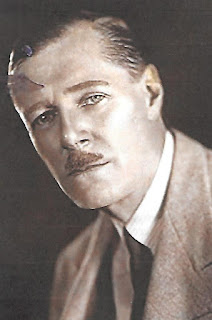
                                                                         GILBERT EMERY

The Hero is a unique story that focuses on a soldier, Oswald Lane, who in 1919 returns home to a small suburban town near New York City. His Mother, Sarah, and older brother, Andrew, have not seen Oswald since he ran away from home twelve years earlier at the age of sixteen. The family has had no contact with him since that time.

Andrew, about forty years old, works as an insurance clerk and is married to Hester who is twenty-six years old. They have a six-year-old son named Andy. There are two other persons who live with this family in their “small rented, jerry-built house.” Sarah Lane is Andrew’s mother, who was a farm woman, and Marthe Roche, a young, pretty orphan from Belgian. She helps with the household chores as well as providing some care for Andy. Hester and Marthe are immediately enamored of handsome, brave Oswald who returns unexpectedly from a hospital in France.

Act Two is in the “Sitting Room of the House.” It is three months after Oswald’s arrival home. He had spoken at the church earlier this evening about his war experiences. Oswald’s heroism is established in the minds of the people of this town, while his character at home reveals a man who is without scruples.

Act Three is in the same location. It is 8 AM the next morning. Oswald is determined to leave this house and return to France.  He plans to steal the church collection that resulted from his talk the previous evening. Since Andrew oversees the church’s money, last night’s collection has been locked away in his home. Oswald takes it and leaves. Just as he sets out to depart from their small town for France, the kindergarten where little Andy goes to school catches on fire. Once again Oswald proves to be heroic. This time it is at the cost of his own life; however, Andrew can now neatly explain the loss of the Church’s money so no further disgrace from Oswald’s latest misdeed falls upon his family.

The Hero never openly discusses what is to be done with the man who is a “hero” in war and an “undesirable citizen” when at home?  But in acts two and three, Oswald’s attitude and actions strip him of his former glory until the play’s conclusion. This is obviously an unusual and unsentimental topic for the decade immediately following World War One.

The Hero premiered in New York City at the Longacre Theatre on March 14,1921, one year after the end of the Spanish flu. It was a short engagement of five “special matinee” performances.   Its main Broadway production opened at the Belmont Theatre on September 5, 1921, where it ran for eighty performances. Sam H. Harris (1872-1941) was producer of both productions as well as owner of the Longacre Theatre. There were only two actors who appeared in both productions—Robert Ames (1889-1931) played Oswald and Blanche Friderici (1878-1933) played Sarah Lane.  The other four roles were recast, and Richard Bennett (1870-1944) played Andrew Lane.

The Hero was published in Arthur Hobson Quinn’s “Contemporary American Plays” and in Burns Mantle’s “Best American Plays of 1921-22.”  During the 1920s, The Hero was produced in numerous American cities.

On January 1, 1923 an American silent film was released and the storyline was based on The Hero. It starred Oswalt Glass (18??-19?? ) as Oswald and Barbara La Marr (1896-1926) as Hester Lane.  When the film was released in Great Britain during the second week in November 1923, its title was changed to His Brother’s Wife. It had good reviews and played throughout the country for three years.

On April 8,1930 the “Evening Express” newspaper in Los Angeles California reported “two of the largest audiences ever to witness a legitimate stage play in California are expected at the Shrine Civic Auditorium” to attend two performances of “The Hero.”  The seating capacity of this auditorium was 6500 persons.  This production starring Broadway actor Grant Mitchell (1874-1957) was already being performed in Los Angeles by the Civic Repertory Theatre at the Music Box Theatre, but the entire cast and production were moved to the Shriner’s theatre and the two performances were free of charge to the Shriners and their families.

During March 2014, there was an Off-Broadway production of The Hero at the Metropolitan Playhouse. It opened on March 8 and closed on March 30th.  Christian Rozakis played the role of Oswald. The New York Times review on March 10th states:

           There’s a lot to watch in “The Hero.”  But the real action is under the surface.

           This exceptional revival of Gilbert Emery’s 1921 play is steeped in subtext

           and repressed emotions: confusion, regret, desire and despair. Here, the silent

           moments are among the most moving.     


The most recent undertaking of this play was part of a celebration of Gilbert Emery’s life and works in his birth city of Naples, New York. The Bristol Valley Theatre presented a live stage reading of The Hero on October 24, 2021.

There is something about this play that lingers with you after even a single reading. The copy I read is in “Modern American and British Plays” by S. Marion Tucker. (New York and London: Harper & Brothers Publishers, 1931)    

Monday, July 17, 2017

LULA VOLLMER’S SUN-UP


Lula Vollmer (1898-1955) was born in Keyser, North Carolina. After she moved to New York City in 1918, she wrote her first play titled Sun-Up. It is set in the Appalachian mountains of her home state. Vollmer was one of the early playwrights to write a folk-play. This type of drama represented Americans who lived in isolated locations of the United States and retained a way of life that was not based on current news, recent inventions and latest fashions. Vollmer’s characters are depicted as living in a manner similar to those of the early mountain settlers.
Lula Vollmer
Sun-Up was inspired by an anecdote Vollmer heard in 1918 about a mountain boy who exclaimed when he first arrived at his army camp: “Air this hyar France?” It is interesting that after World War One, the returning soldiers, who were from the mountains, began to dismantle some of the barriers of isolation that underpinned the old ways of mountain life.

Sun-Up is set in the remote mountain cabin of Lisa Cagle, a widow whose husband made illegal whiskey known as “moonshine.” It is established in the play that many years earlier Mrs. Cagle’s husband had been killed by a federal revenue agent. Act One begins at noon on June 5, 1917. Mrs Gagle’s son, named Rufe, initiates the action for the plot. Unbeknownst to his mother, Rufe has registered for the draft. As a result of this he asks Emmy Todd, his girlfriend, to marry him.

Mrs. Gagle is bitterly hostile to the national government and its laws. She is opposed to Rufe going to fight for “The Law.” She strongly believes the government is responsible for the deaths of her father and husband. She fears the government will also kill her son.

Act Two takes place in the same cabin on a late September, 1917 afternoon. Rufe and Emmy are married in the cabin and immediately afterward he leaves for the army training camp. Rufe has very little knowledge about the war. He has no idea who the Germans are.  He also believes France is about forty miles from his cabin, somewhere near the town of Ashville. He gives Emmy and her brother Bud instructions to take care of his Mother. 
   
Act Three, Scene 1 takes place in February, 1918 at midnight. Once again it is the main room in Mrs. Gagle’s cabin. A blizzard is raging which makes the door of the cabin shake. Mrs Cagle holds a yellow envelope in her hand. It is from the government.  Since she cannot read, she needs to wait for Emmy to return. A young man comes to her door and she lets him in. He is a deserter from his army camp.

Act Three, Scene 2 is a few hours later. Mrs. Gagle wakes Emmy and the deserter. The Sheriff comes to the cabin looking for the deserter. He tells Mrs. Gagle the deserter is the son of the revenue officer who, many years ago, killed her husband. This concluding scene is exciting and moving. The play ends with Mrs. Gagle having an epiphany that demonstrates a total change of heart.

Although Sun-Up was written in 1918, it was not produced until 1923.  Vollmer worked in the business office at the Theatre Guild, but her play was not presented by that group. It was produced by the Players Company at the Provincetown Theatre in New York City opening on May 24, 1923. The May 25, 1923 review in the New York Times proclaimed: “As thunderous an ovation as the tiny Provincetown Theatre could hold followed the final curtain last night of a “Sun-Up.” It praised both the acting and the work of the playwright. Since Sun-Up was so successful at the box office, it was eventually transferred to the larger Lenox Hill Theatre and then the Princess Theatre, It closed on May 3, 1924 in New York after a run of forty-nine weeks.

Lucille La Verne (1872-1945) was an established Broadway actress when she starred as Widow Cagle. La Verne played this role for more than 3,000 stage performances. She played Widow Cagle when Sun-Up was produced at the Vaudeville Theatre in London. This production opened on May 4, 1925 and later was transferred to the Lyric Theatre. On August 13th King George and Queen Mary attended a performance. When La Verne received an ovation at the end of the performance, all the royal party joined in the applause. The run in London lasted for eight months where it played for 234 performances. Sun-Up also toured the smaller cities in Great Britain for a year.

La Verne produced the Broadway revival of the play and starred in it. It opened October 22, 1928 and played for 101 performances until January, 1929. During the following summer this production toured to Paris, France and it opened at Les Maturins on June 20, 1929. Other European cities that saw different productions of Sun-Up include Budapest and Amsterdam. The play had been translated into Dutch for that production.

During the two seasons of 1927-28 and 1928-29, Sun-Up was the most popular American play produced by many of the 475 Little Theatres in the United States.  The Manhattan Little Theatre Club, Inc. produced a second New York City revival of the play on May 9, 1930 at the Waldorf Theatre. Since this large theatre had the capacity to seat over 1,000 persons, the production was only scheduled for one performance. 
 
Sun-Up became a silent film in 1925. It starred Lucille La Verne and Conrad Nagel (1897-1970) who played Rufe. This sixty minute film was released by Metro-Goldwyn Mayer September 20, 1925.

The play was published in April, 1924 by Brentano’s, Inc.  They produced their eighth printing by February, 1932. Burns Mantle included Sun-Up in his volume The Best Plays of 1923-24. The script also appeared in Representative American Plays by Arthur Hobson Quinn (1875-1960).

The London Times announced on May 22, 1939: “Dame Sybil Thorndike made her first appearance on television last week as the Widow Cagle in Miss Lula Vollmer’s play Sun-Up.” Thorndike is praised for her remarkable performance particularly in the final scene of the play. The article states: “it is a tremendous scene and Dame Sybil Thorndike rose to it.”

In 1954 Sun-Up was presented by the Provincetown Playhouse as a one-act opera. The New York Times discussed this production on November 11, 1954. The opera was created by Tadeusz Kassern (1904-1957) a Polish composer living in the United States. Lula Vollmer attended the opening performance of the opera.

I found reviews of a more recent production of this remarkable play. The Metropolitan Playhouse in New York City produced Sun-Up in March of 2003.  The play and the production received positive comments.

I am impressed by this American folk-drama that had the ability to speak to people of different nations. The directness of the characters and the situation still resonant today.

NOTE: The photo appeared in The Sphere (London) on 16 May 1925.